How much is my junk car worth in Wisconsin?
Most land between $200 and $2,500 — and where yours falls comes down to four things, one of which is a single part bolted under the floor.
- ✓Estimate it yourself in under a minute01
- ✓The converter alone is 15–40% of the number02
- ✓Towing included, cash at the curb03
Get the real number
A junk car's value comes from its recoverable metal and its reusable parts — not its mileage, and not whether it still starts. A car that hasn't moved in three years still has steel in the body, aluminum in the wheels and engine, copper in the harness, and a converter someone will pay for. That's why older cars are so often worth more than their owners assume.
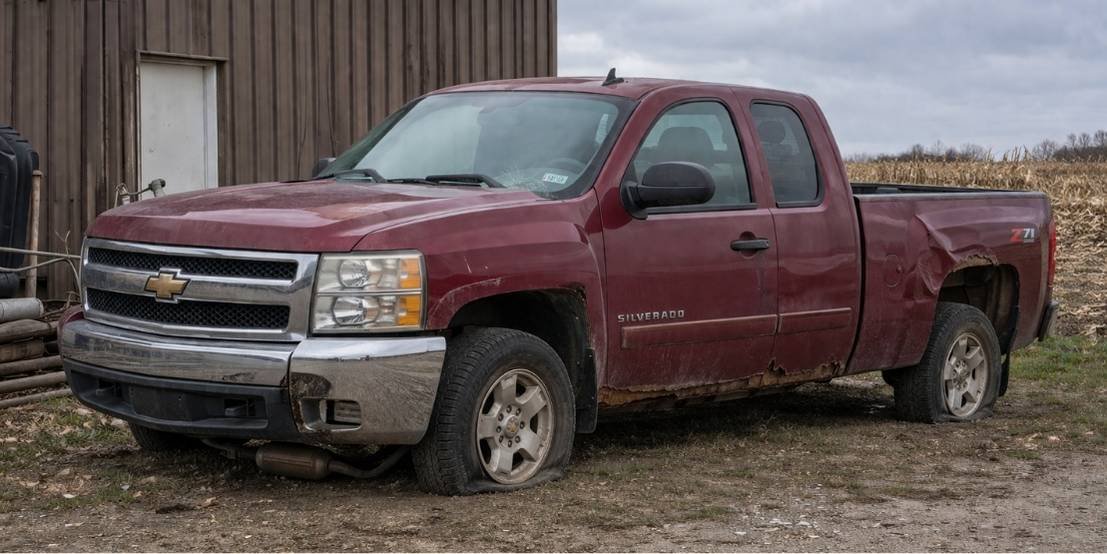
A running four-door with its converter still on it sits near the top of the range. A stripped, rusted-out compact with the converter already cut off sits near the bottom. The spread between those two is the whole reason "how much for a junk car" never has one flat answer.
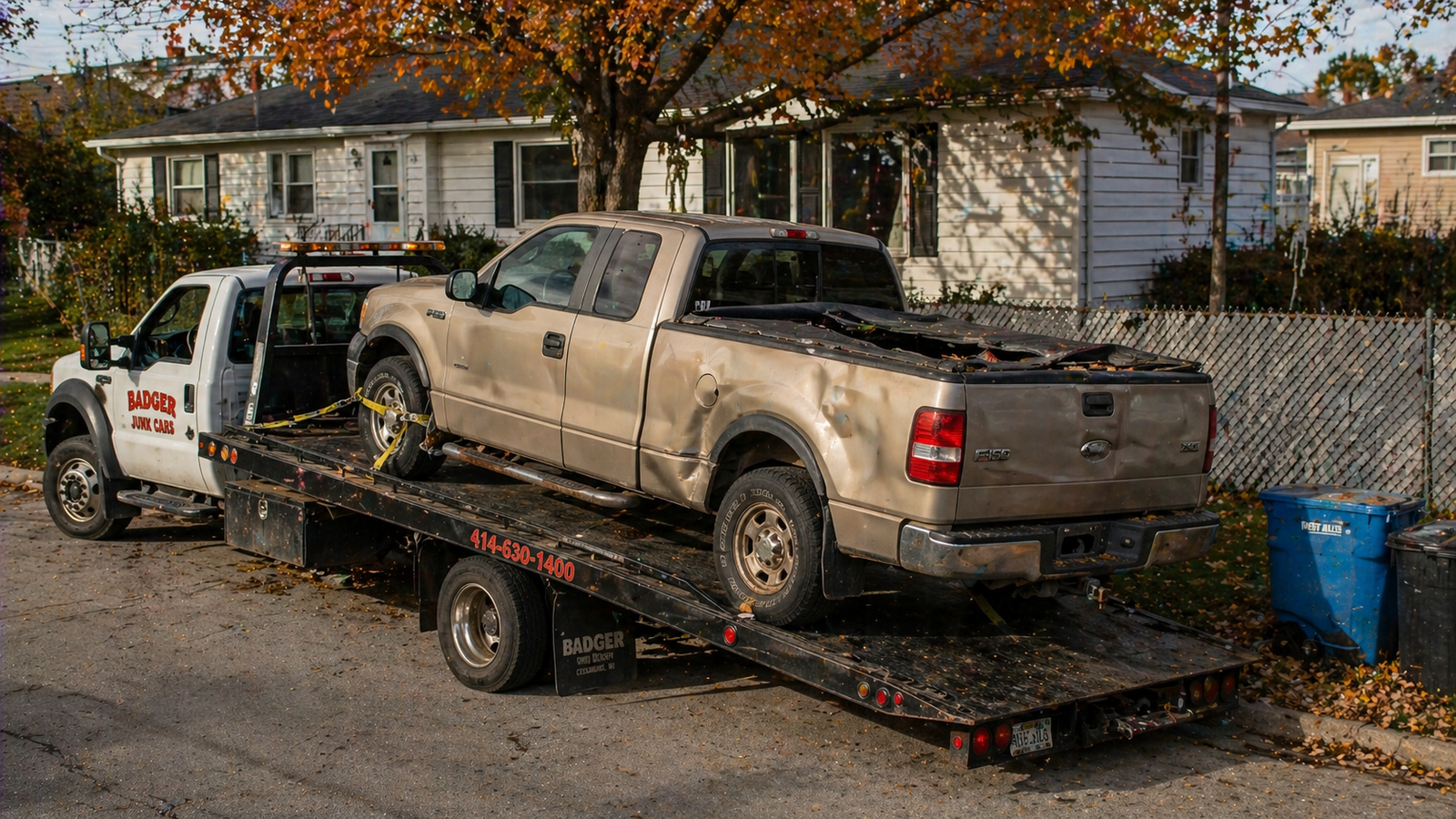
Badger Junk Cars has been buying across Milwaukee and Southeast Wisconsin since 2014 — cars and sedans, pickups, SUVs, vans, motorcycles, RVs and fleet lots. Running or not, wrecked, flooded, no keys. We buy the vehicle, haul it on our own flatbed, and scrap it for its metal, which is exactly why the number we quote is built from what's physically in the car.
The rest of this page shows how that number gets assembled, piece by piece, so you can work out your own before you ever pick up the phone.
Where we pick up junk cars
around Milwaukee
Roughly a 40-mile radius of the Walker's Point yard at 530 S Muskego Ave — and the tow is included at every address in it.
Red chips have their own pickup page · plain chips are covered identically
Inside Milwaukee County the trucks run daily to the South Side, Bay View, the East Side, West Allis, Wauwatosa, Greenfield and the southern lakeshore suburbs. West into Waukesha County we cover Waukesha, Brookfield and New Berlin. South toward the state line we reach Racine and Kenosha. If you're near any of those and unsure whether you're in range, the dispatch answer is usually yes — give us the ZIP.
There's a local reason a metal buyer stays busy here. Southeast Wisconsin winters mean years of road salt, and salt eats a body from the rocker panels and wheel wells upward. A large share of what we haul out of Milwaukee is structurally rusted but still packed with recoverable steel, sound wheels and an intact converter.
A rusted lakeshore car is not a worthless car. Get the number before you assume otherwise.
From quote to cash
in three steps
Most owners finish the same day.
Get a figure in about a minute
Call (414) 367-7245 or send a couple of photos. Tell us the year, make and model, whether it runs, whether the converter is still fitted, and what paperwork you have.
That's enough for a firm number — not a vague "we'll see when we get there."
We set a same-day pickup
Take the number and a flatbed gets scheduled to your address, with the driver already working nearest your ZIP routed to you.
Non-running, wrecked, flooded and no-keys are all ordinary. Missing paperwork isn't a dead end either — raise it early and we'll tell you what your vehicle needs before the truck is booked.
You get cash on the spot
At the curb the driver checks the vehicle against what you described, signs the transfer, hands over the agreed cash and loads it.
The tow is free and never deducted, so the figure agreed on the phone is the figure in your hand.
Because the number is firm before the truck rolls, there's no renegotiation at the curb — the one part of selling a junk car people brace for hardest. What follows is how that number actually gets built, starting with why it can shift between one week and the next.
The longer version of the process →Why your quote can change
from one day to the next
Your car is priced against the daily market for the metals it's made of. When they climb, offers climb. When the market softens, offers ease back.
What a typical car is made of
By recoverable mass
Most of a junk car's bulk is scrap steel, with smaller amounts of aluminum in the wheels and engine, and copper running through the wiring. Recovered metal trades at whatever the market sets that day, which means the metal price is the ceiling on what any honest buyer can pay — not a number a buyer picks.
Mill and export demand move those prices week to week. A car's bare-metal figure tracks how much it weighs against whatever a ton is fetching that morning, before yards deduct for tires and fluids.
It's the same reason the quote you got last week isn't the quote you'll get today.
We buy the vehicle and scrap it for that metal ourselves, so we quote against the live figure rather than a stale flat rate. That's also why a quote has a short shelf life — take the number while the market's there and it's the number we pay. Metal is only one of four inputs, though, and the rest of this page walks the others.
How we buy, start to finish →Estimate your offer by vehicle
type, age, and condition
Start with your vehicle type, then adjust for age, weight, and what's still bolted on. These are our typical Milwaukee ranges — estimated, not guaranteed, since the final figure depends on the day's metal market and your car's specifics.
Vehicle type
Model year
Older cars still price on metal and parts — age nudges the figure, it doesn't erase it.
Size for its class
About 3,000–3,600 lb for an average car.
Catalytic converter
Still on the vehicle
Your estimate
2008 car, average weight, converter fitted
What's moving your number
Move toward the top of your type's range if the vehicle is newer, a heavier or popular model, still carries its converter, and rolls on decent wheels with the battery, alternator and starter in place.
Move toward the bottom if the converter has been cut off, the car has been picked over, or it's a light compact with little recoverable metal. Whether it runs nudges the figure — but a non-running car is still valued on its metal and parts, never written off.
Treat this as a starting point rather than a promise. Two things move an estimate more than anything else, and both get a section of their own below: the converter, and the four factors sitting underneath every offer.
If your vehicle is unusual — a fleet lot priced per unit, a boat on a trailer, something with a salvage title — the estimator will get you in the neighbourhood, and a two-minute call gets you the rest of the way.
The catalytic converter:
your biggest value swing
An intact converter is commonly 15% to 40% of the whole offer. It's why two identical-looking cars can quote hundreds of dollars apart — one still has its converter, the other had it cut off.
V.1
What's actually inside it
A converter holds small quantities of platinum, palladium and rhodium, and those get reclaimed and resold. It's the same reason converter theft became a nationwide problem. Value tracks those precious-metal prices, which is why an intact unit is worth far more than its weight in steel.
V.2
Original beats aftermarket, every time
A factory-fitted converter carries substantially more of those metals than a replacement unit. If yours was swapped at a muffler shop years ago it still credits — just at a fraction of what the original would have. Tell us which you have and the estimate above adjusts for it.
V.3
What comes next after the converter
Then the wheels and tires, the battery, the alternator and the starter. These are reusable components credited above bare scrap weight because they can be tested and resold rather than shredded. A complete car outvalues the same car picked over for parts — which is the argument against selling it off piece by piece.
The four factors that decide
what your junk car is worth
Every honest offer, ours included, is these four things multiplied out. Here's how each one moves the figure.
Year, make, and model
Before a wrench is turned
Newer, popular and heavier vehicles price higher because their parts stay in demand and there's simply more material in them. A late-model pickup with sought-after components sits well above an old economy compact even when both are equally dead.
Curb weight
The raw-material floor
Metal is paid by weight, so a heavier vehicle carries more recoverable steel. That's what "worth by weight" actually means — and it's the one input you can look up for your own model in about ten seconds.
Bare metal is only a modest share of the total — which is exactly why the parts and the converter matter so much on top of it.
Condition and completeness
Whole beats picked-over
A complete vehicle outsells a stripped one. The converter is the largest single piece here, then the wheels, battery, alternator and starter. Whether it starts adds a little, but completeness matters more than whether it runs.
The day's metal market
The ceiling on everything
Steel, aluminum and copper are priced daily, and that sets the ceiling on every offer — which is why quotes shift between one week and the next. It's how junk car prices get calculated at the material level, and it's covered in full further up this page.
Put those four together and you get a figure built for your vehicle rather than a flat per-car lowball that ignores everything about it. It's also why a buyer who quotes the same amount for every car in a ZIP code is telling you something about how they price, not about what your car is worth.
How we buy, start to finish →Junk car value questions, answered
The six that come up most often when someone is trying to work out what their car is actually worth. Something else? Ask dispatch.
A common rule of thumb: once a needed repair runs more than about $3,000 — or more than the car is worth — selling beats fixing. Past that line a scrap buyer usually nets you more than another repair bill, especially on an older car where the repair won't come back in resale.
A buyer who scraps the vehicle themselves, because the offer is tied to real recoverable value — weight, parts, and an intact converter against the day's metal market — rather than a broker's markup. Heavier vehicles with their converters on top the board wherever you sell.
Start with the four inputs on this page: the year/make/model, the curb weight, how complete it is (converter first, then wheels, battery, alternator, starter), and the day's metal market. The estimator above puts numbers to them; a photo or phone check firms it up.
Bare scrap is roughly the curb weight against the day's per-ton steel price, minus deductions for tires and fluids. But that's only the floor — the converter and reusable parts sit on top, and on most cars they matter more than the raw tonnage.
It doesn't change the metal or the parts, so the value is the same — it changes the paperwork. Wisconsin normally completes a sale on the title, and a registered owner whose copy is missing can request a replacement. Raise it on the first call and we'll tell you what your vehicle needs.
Yes, at every address in range, and it's never deducted from the offer. The tow, the distance, and a car that won't roll onto the truck are all built into the number — so the figure agreed on the phone is the figure handed to you at the curb.
The rest of what you
might be looking for
One short conversation
Get my cash offer
Tell us about your vehicle anywhere in the area, accept the number, and set a pickup with the tow included and cash at the curb. Year, make, model, and condition — or just the VIN.
Buying with or without a title, running or not. Not sure we reach your street? Give dispatch the ZIP — if it's in range, your offer stands exactly as it would downtown. You can also start the quote online or reach us here.
530 S Muskego Ave, Milwaukee, WI 53204
Open every day · 7 AM – 9 PM